Sierra 1500 Engine Horsepower Across All Model Generations
The Sierra 1500 has evolved from a capable work truck to a sophisticated powerhouse over its multi-decade production run. At the heart of this transformation lies the continuous development of its engines, with each generation bringing significant improvements in horsepower, torque, efficiency, and technology. This comprehensive examination tracks the evolution of Sierra 1500 engine power […]
The Sierra 1500 has evolved from a capable work truck to a sophisticated powerhouse over its multi-decade production run. At the heart of this transformation lies the continuous development of its engines, with each generation bringing significant improvements in horsepower, torque, efficiency, and technology. This comprehensive examination tracks the evolution of Sierra 1500 engine power across generations, highlighting the key advancements that have defined GMC’s flagship pickup truck.
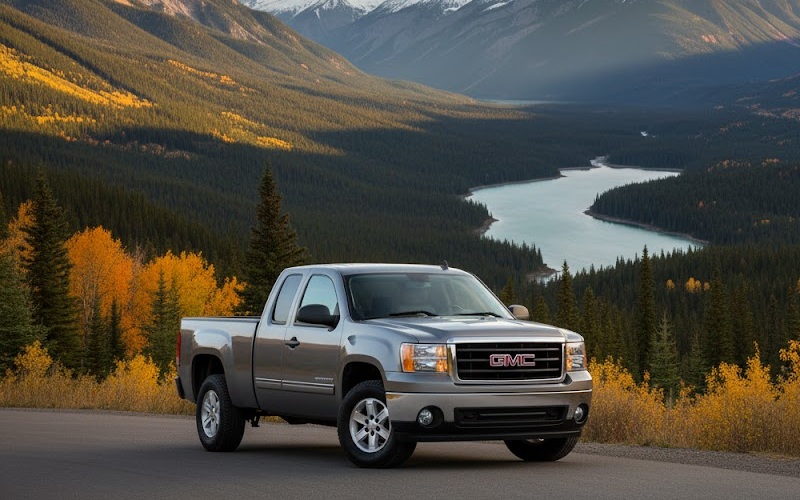
From modest beginnings with simple pushrod V6 and V8 engines to today’s sophisticated power plants featuring direct injection, variable valve timing, and cylinder deactivation, the Sierra powertrain development tells a compelling story of automotive engineering progress. Let’s explore how the Sierra 1500 horsepower figures have climbed through the years, reflecting changing consumer expectations and technological capabilities.
First Generation (1988-1998): Establishing the Foundation
Platform and Engine Architecture
The first-generation Sierra 1500, built on the GMT400 platform, represented GMC’s initial step toward establishing a distinctive truck identity. During this era, engines emphasized reliability and straightforward design over high horsepower figures.
Power Options
The first-generation Sierra offered several engine choices with modest power outputs by today’s standards:
- 4.3L V6: This base engine started at approximately 119 kW (160 hp) in early models, with gradual improvements throughout the generation
- 5.0L V8: The small-block V8 produced around 130 kW (175 hp)
- 5.7L V8: The top engine option generated approximately 157 kW (210 hp)
Technology Context
These engines featured traditional throttle-body or multi-port fuel injection systems, representing the transition away from carburetors. While not power monsters by modern standards, these engines established a reputation for durability and reasonable performance for their era, with the 5.7L V8 becoming particularly renowned for its balance of power and reliability.
Second Generation (1999-2006): Power Advancement
Platform Evolution
The second-generation Sierra 1500, built on the GMT800 platform, brought significant advancements in engine technology and performance. This generation coincided with growing consumer expectations for both capability and refinement.
Enhanced Power Options
Engine options expanded with notable horsepower increases:
- 4.3L V6: Power increased to approximately 149 kW (200 hp)
- 4.8L V8: This new addition to the lineup generated about 201 kW (270 hp)
- 5.3L V8: Replacing the 5.0L, this engine produced approximately 213 kW (285 hp)
- 6.0L V8 (Denali): The premium Denali trim introduced this powerful engine option with 242 kW (325 hp)
Technological Improvements
This generation saw the widespread implementation of sequential multi-port fuel injection across the engine lineup, improving both power delivery and efficiency. The introduction of the Denali trim with its 6.0L V8 signaled GMC’s recognition that truck buyers increasingly desired high-performance options beyond what was strictly necessary for utility purposes.
Third Generation (2007-2013): The Power Surge
GMT900 Platform Advantages
The third-generation Sierra 1500 on the GMT900 platform represented a significant leap forward in power and sophistication. Engine design focused on increasing horsepower while beginning to address efficiency concerns.
Expanded Power Range
This generation featured a wide array of engine options with substantial power increases:
- 4.3L V6: The base V6 offered approximately 145 kW (195 hp)
- 4.8L V8: Output increased to around 220 kW (295 hp)
- 5.3L V8: Power rose to approximately 235 kW (315 hp)
- 6.0L V8: Available on higher trims with approximately 274 kW (367 hp)
- 6.2L V8: Introduced later in this generation, producing an impressive 301 kW (403 hp)
Advanced Technologies
This generation introduced Active Fuel Management (cylinder deactivation) on V8 engines, allowing them to operate on four cylinders under light loads for improved fuel efficiency without sacrificing maximum horsepower. Variable valve timing also made its appearance, contributing to both power increases and improved efficiency. The 6.2L V8 represented a new high-water mark for half-ton truck power, breaking the 400 horsepower barrier.
Fourth Generation (2014-2018): EcoTec3 Revolution
K2XX Platform Innovations
The fourth-generation Sierra on the K2XX platform brought revolutionary changes to the engine lineup with the introduction of the EcoTec3 family of engines, focusing on combining power with improved efficiency.
High-Tech Power Options
This generation featured thoroughly modernized engines with significant horsepower increases:
- 4.3L V6 (LV3): Completely redesigned with 213 kW (285 hp)
- 5.3L V8 (L83): Updated to produce 265 kW (355 hp)
- 6.2L V8 (L86): The flagship engine offering 313 kW (420 hp)
Technological Breakthroughs
The EcoTec3 engine family introduced three major technologies across all engines: direct fuel injection, variable valve timing, and Active Fuel Management. These combined technologies delivered more power while improving fuel efficiency. The 4.3L V6 saw the most dramatic improvement, jumping nearly 90 horsepower from the previous generation while simultaneously improving fuel economy.
Fifth Generation (2019-Present): Power Diversity
T1XX Platform Advantages
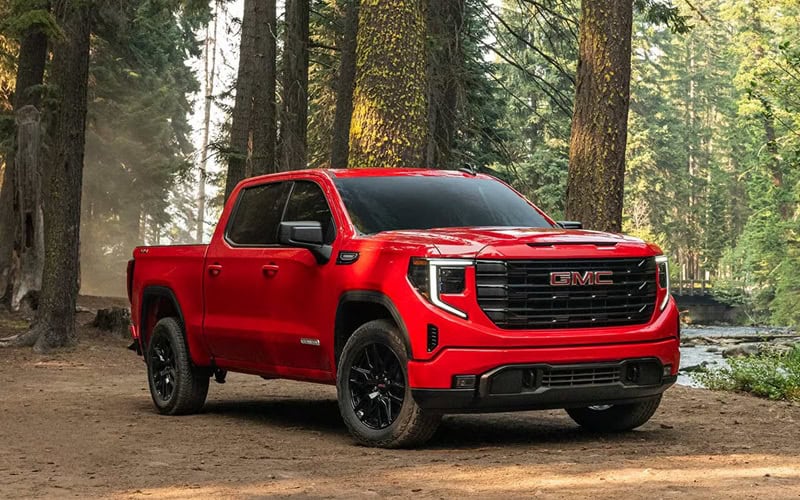
The current generation Sierra 1500 on the T1XX platform represents the most diverse powertrain lineup in the model’s history, with a focus on offering the right power solution for different customer needs.
Expanded Power Portfolio
The fifth-generation Sierra offers unprecedented engine diversity:
- 2.7L Turbocharged I4: This innovative base engine produces 231 kW (310 hp)
- 4.3L V6: Initially carried over with 213 kW (285 hp), later discontinued
- 5.3L V8: Continued with 265 kW (355 hp), now with Dynamic Fuel Management on some variants
- 6.2L V8: The top gasoline option maintained at 313 kW (420 hp)
- 3.0L Duramax Turbo-Diesel I6: Added as an efficiency option with 207 kW (277 hp)
Cutting-Edge Technology
The fifth-generation introduced Dynamic Fuel Management on V8 engines, an advanced form of cylinder deactivation that can operate on as few as two cylinders. The addition of a turbocharged four-cylinder and turbo-diesel six-cylinder broadened the lineup significantly, offering customers more choices to match their specific needs. The 10-speed automatic transmission further optimized power delivery across the engine range.
Power Comparison Across Generations
Base Engine Evolution
The progression of the base engine option illustrates the Sierra power evolution:
- First Generation: 4.3L V6 with 119 kW (160 hp)
- Second Generation: 4.3L V6 with 149 kW (200 hp)
- Third Generation: 4.3L V6 with 145 kW (195 hp)
- Fourth Generation: 4.3L V6 with 213 kW (285 hp)
- Fifth Generation: 2.7L Turbo I4 with 231 kW (310 hp)
Top Engine Progression
The flagship engine option shows even more dramatic advancement:
- First Generation: 5.7L V8 with 157 kW (210 hp)
- Second Generation: 6.0L V8 with 242 kW (325 hp)
- Third Generation: 6.2L V8 with 301 kW (403 hp)
- Fourth Generation: 6.2L V8 with 313 kW (420 hp)
- Fifth Generation: 6.2L V8 with 313 kW (420 hp)
Specialized Variants and Their Power Profiles
Denali Power Evolution
The premium Denali trim has consistently offered top-tier power options:
- Second Generation Introduction: 6.0L V8 with 242 kW (325 hp)
- Third Generation: 6.2L V8 with 301 kW (403 hp)
- Fourth Generation: 6.2L V8 with 313 kW (420 hp)
- Fifth Generation: 6.2L V8 with 313 kW (420 hp)
AT4 and AT4X Performance
The off-road focused AT4 and AT4X trims introduced in the fifth generation offer specialized power options:
- AT4 (2019-Present): Available with 5.3L V8 (355 hp), 6.2L V8 (420 hp), or 3.0L Diesel (277 hp)
- AT4X (2022-Present): Standard with 6.2L V8 (420 hp)
Power-to-Weight Ratio Considerations
Weight Increase Impact
Despite significant horsepower increases, the Sierra has also grown heavier over time:
- First Generation: Approximately 1,800 kg
- Fifth Generation: Approximately 2,200-2,400 kg
This weight increase has partially offset horsepower gains in terms of real-world acceleration, though modern Sierra trucks still significantly outperform their ancestors despite the additional mass.
Performance Metrics
The power-to-weight ratio shows the effective progression of performance:
- First Generation (5.7L V8): Approximately 0.117 hp/kg
- Fifth Generation (6.2L V8): Approximately 0.183 hp/kg
This represents a 56% improvement in the power-to-weight ratio, translating to substantially better acceleration, towing capability, and overall performance.
Efficiency and Power Balance
Fuel Economy Improvements
Despite dramatic horsepower increases, fuel efficiency has improved:
- First Generation: The 210 hp 5.7L V8 achieved approximately 13-15 L/100 km combined
- Fifth Generation: The 420 hp 6.2L V8 achieves approximately 12-14 L/100 km combined
This remarkable feat has been accomplished through technologies like direct injection, cylinder deactivation, variable valve timing, and multi-speed transmissions.
Alternative Power Approaches
The fifth-generation’s diesel option provides an alternative power profile:
- 3.0L Duramax: While offering “only” 277 hp, it delivers 624 N⋅m of torque with superior fuel economy
This represents a different approach to power delivery, emphasizing torque and efficiency over peak horsepower.
Chevy Sierra 1500: The Horsepower Journey
The Sierra 1500 horsepower evolution tells a compelling story of automotive progress. From the modest 160 hp V6 and 210 hp V8 of the first generation to today’s range spanning from a 310 hp turbocharged four-cylinder to the mighty 420 hp 6.2L V8, the Sierra has continuously pushed boundaries of what’s possible in a light-duty pickup.
This power progression hasn’t come at the expense of efficiency or refinement—quite the contrary. Today’s Sierra engines deliver their substantial horsepower with better fuel economy, lower emissions, and greater refinement than their predecessors could have imagined.
As we look to the future, the question becomes not just how much more horsepower might be possible, but how that power will be generated. With electrification on the horizon, the Sierra power story is far from complete. The next chapter may well feature electric motors and battery packs alongside or replacing traditional internal combustion engines, potentially redefining our very concept of horsepower in pickup trucks.
What remains constant is GMC’s commitment to providing Sierra owners with the power they need for work, play, and everything in between—a commitment that has driven the impressive horsepower gains across generations and will continue to define the evolution of the Sierra for years to come.
Questions and Answers About the Sierra 1500
When did the Sierra 1500 first exceed 400 horsepower from the factory?
- The 400-horsepower threshold was first crossed with the third-generation (GMT900) Sierra 1500 when the 6.2L V8 engine was introduced in 2009, producing 403 horsepower—a significant milestone that positioned the Sierra among the most powerful half-ton trucks of its era.
Which Sierra 1500 engine saw the largest single-generation horsepower increase?
- The 4.3L V6 engine experienced the most dramatic transformation between the third and fourth generations, jumping from 195 horsepower in the GMT900 platform (2007-2013) to 285 horsepower in the K2XX platform (2014-2018)—a remarkable 46% increase achieved through the implementation of direct injection, variable valve timing, and improved cylinder head design.
What innovative technology allowed the fifth-generation Sierra to maintain high horsepower while improving fuel efficiency?
- The Dynamic Fuel Management system introduced in the fifth-generation Sierra 1500 enables the 5.3L and 6.2L V8 engines to operate on anything from two to all eight cylinders, using sophisticated algorithms that can switch between 17 different cylinder patterns based on demand—far more advanced than the previous Active Fuel Management that could only alternate between four and eight cylinders.
How does the horsepower-to-weight ratio of the current Sierra 1500 compare to the first generation?
- The first-generation 1988 Sierra 1500 with its most powerful 5.7L V8 produced approximately 210 horsepower in a truck weighing about 1,800 kg, yielding a ratio of 0.117 hp/kg, while today’s Sierra 1500 with the 6.2L V8 generates 420 horsepower in a vehicle weighing approximately 2,300 kg, resulting in a ratio of 0.183 hp/kg—a 56% improvement in power-to-weight performance.
Which Sierra 1500 engine option holds the distinction of offering the most torque with the least horsepower?
- The 3.0L Duramax turbo-diesel inline-six introduced in the fifth-generation Sierra produces a modest 277 horsepower but delivers an impressive 624 N⋅m of torque—creating the greatest disparity between horsepower and torque figures of any Sierra 1500 engine and making it particularly suited to towing applications despite its relatively low horsepower rating.
Disclaimer: Content contained in this post is for informational purposes only and may include features and options from US or international models. Please contact the dealership for more information or to confirm vehicle, feature availability.